Membrillo Hid My Socks

2025

Steam page

Summary

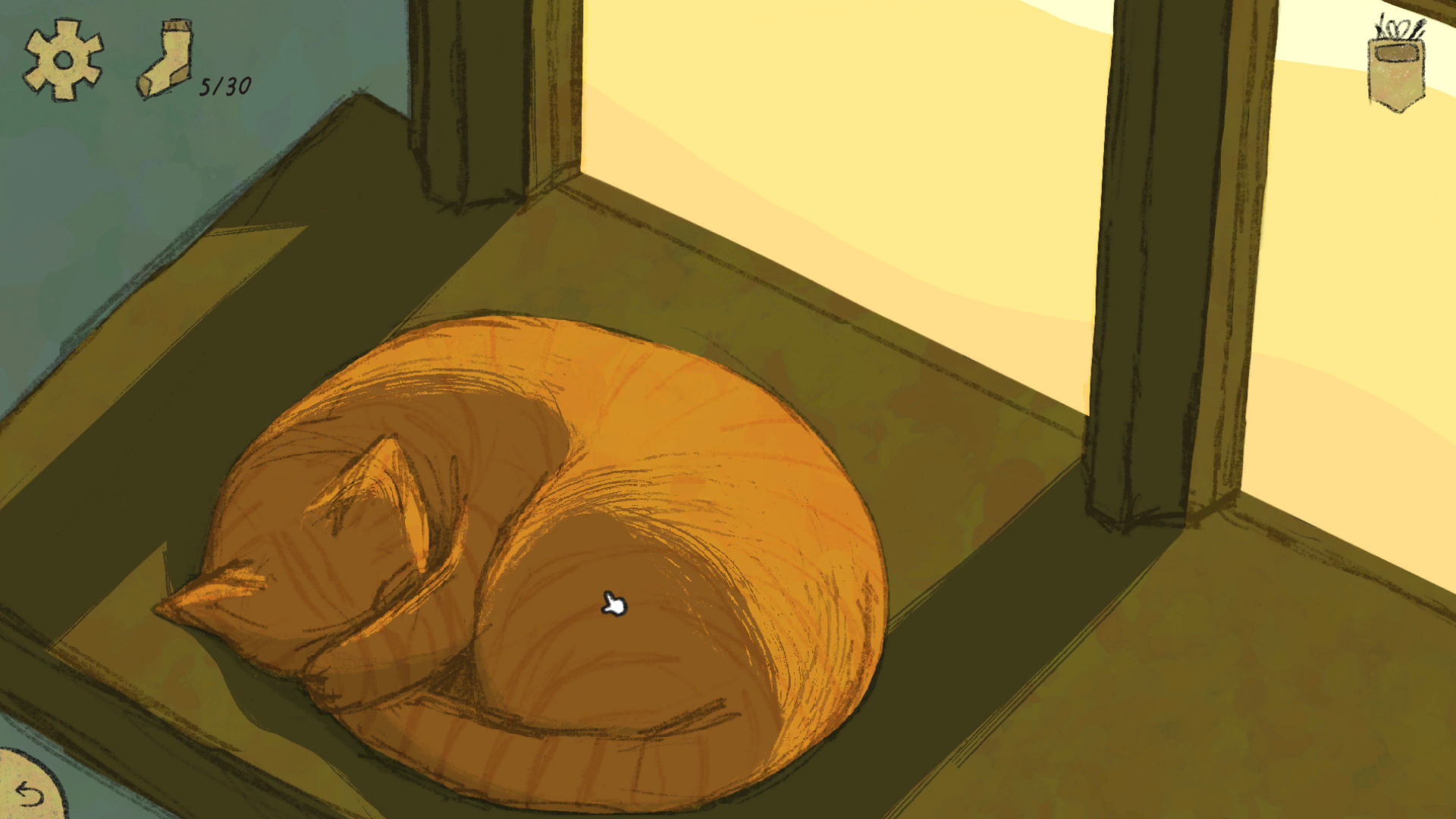
Membrillo Hid My Socks is a silly point & click hidden object game about finding your missing socks after your mischievous cat went on a rampage.

Engine: Unity
Platform: PC
Role: Solo developer
Type: Personal project
My Contribution

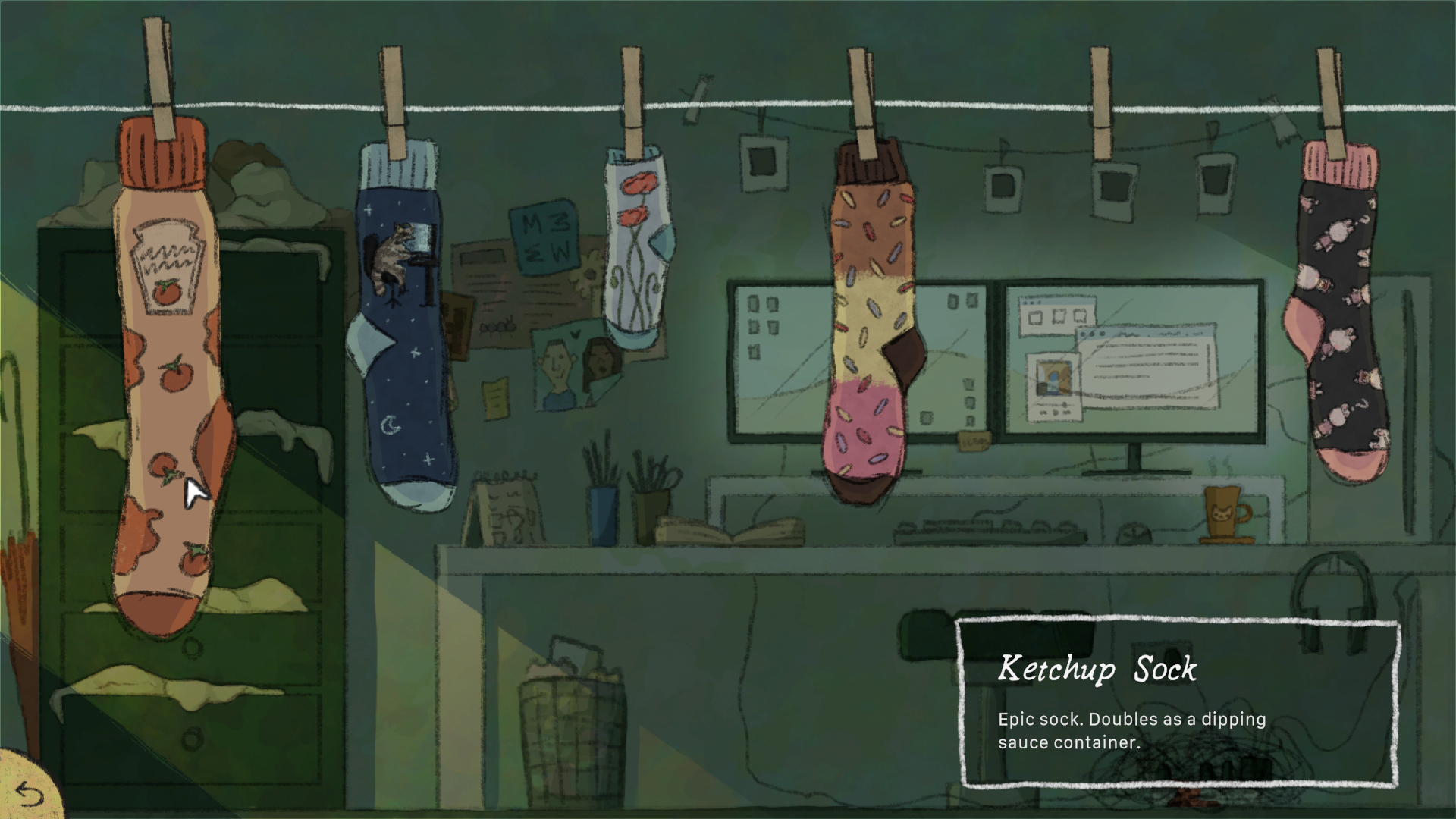
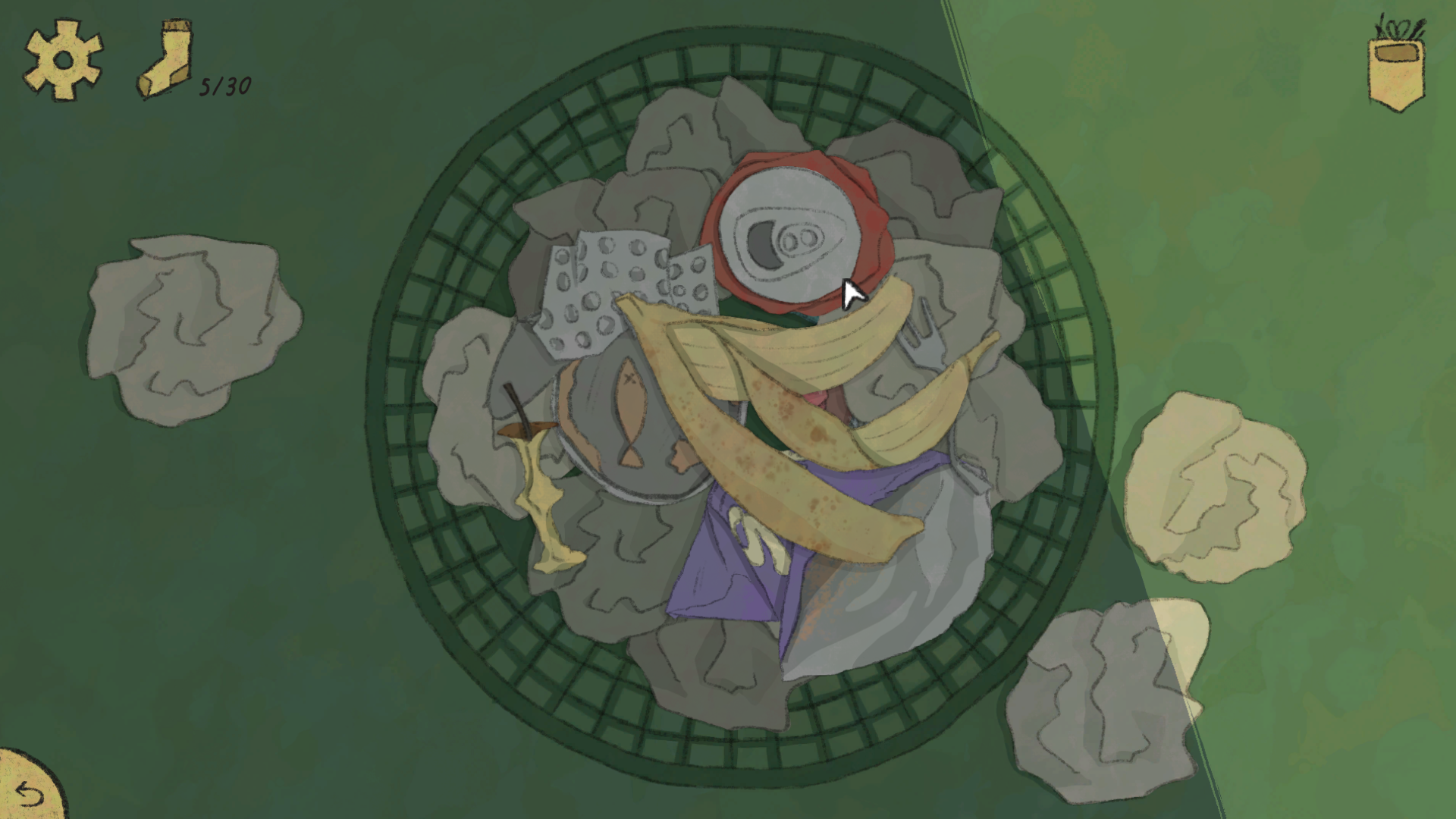
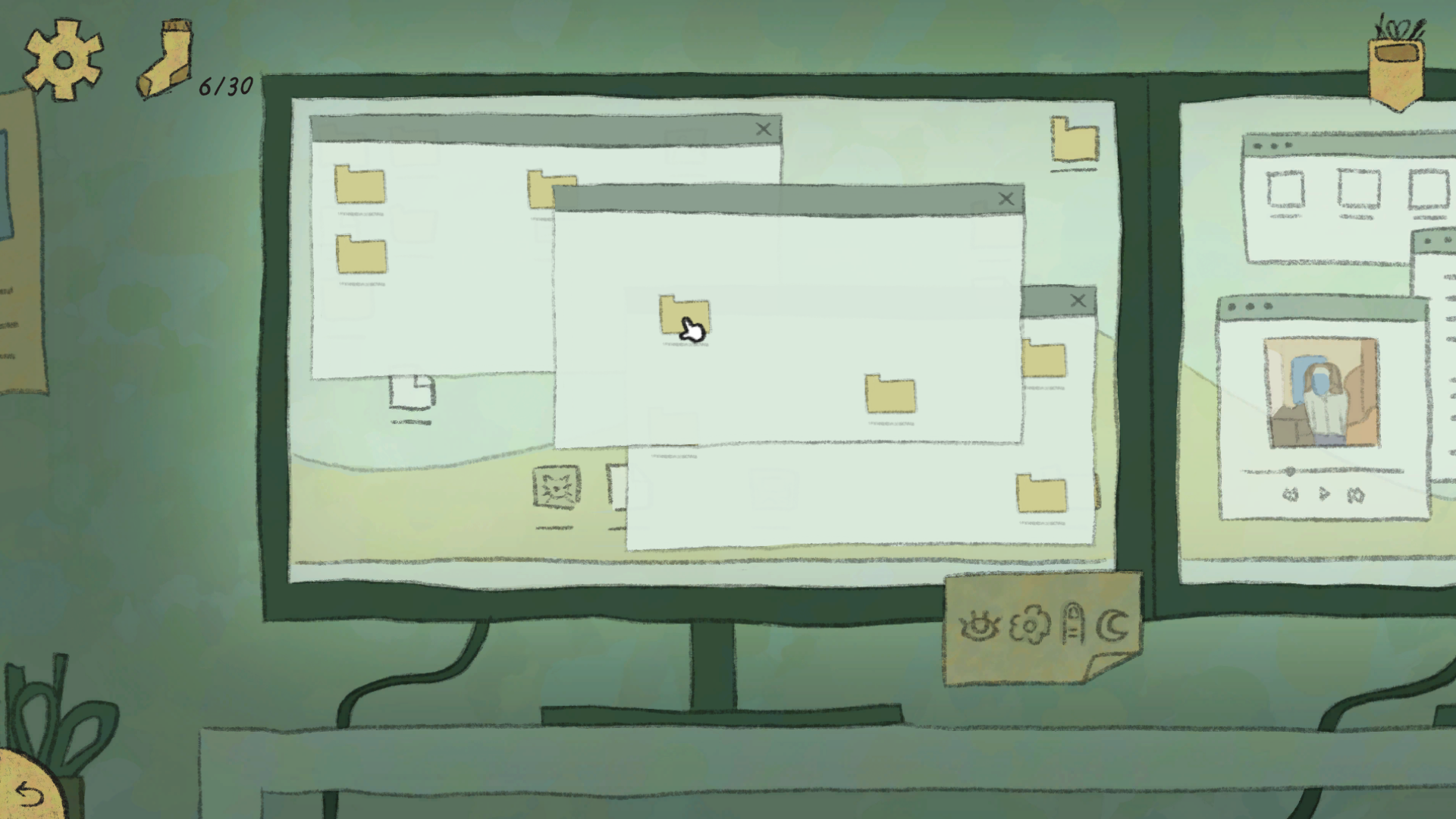
In-game images
In-game images


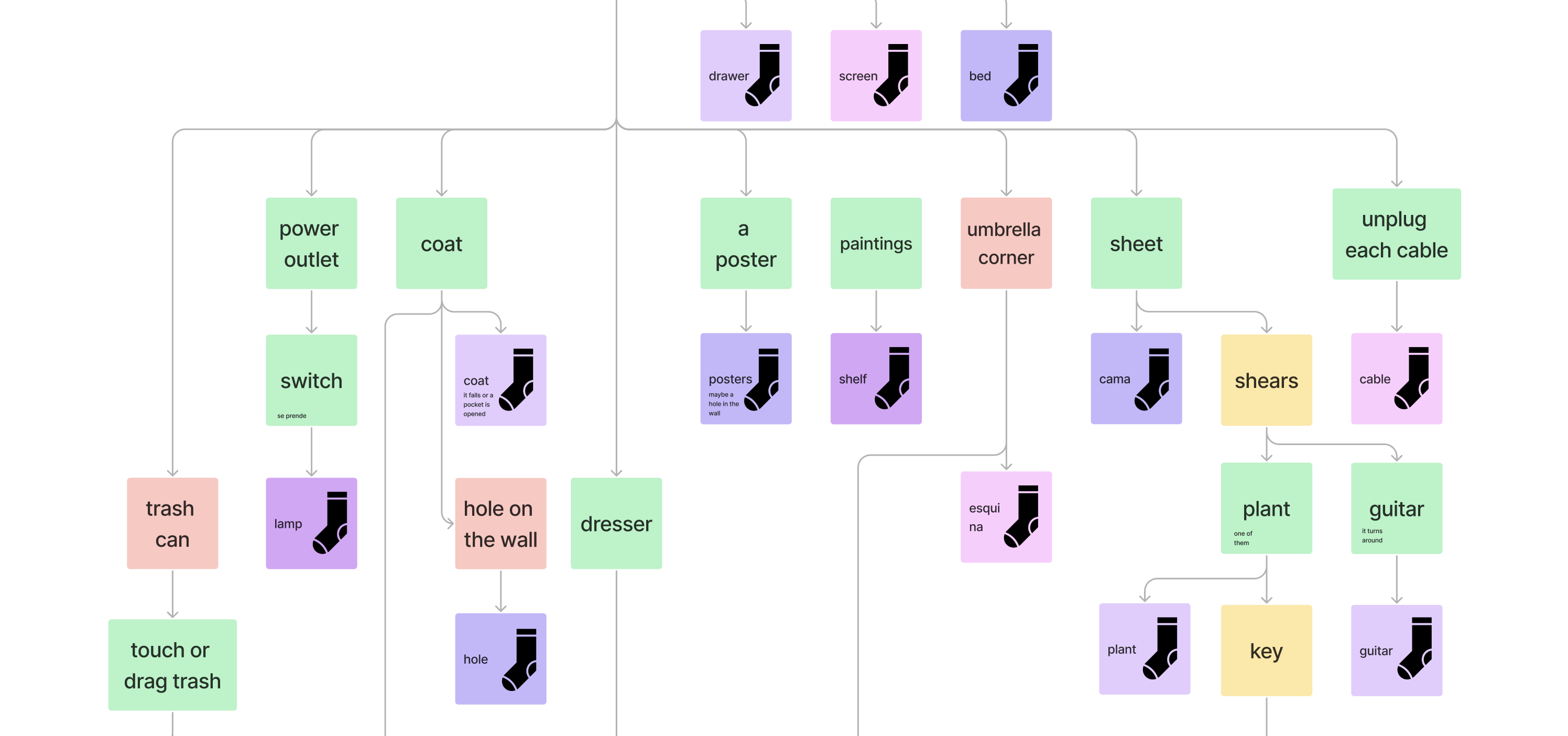
Extract of puzzle dependency chart

Solo Developer

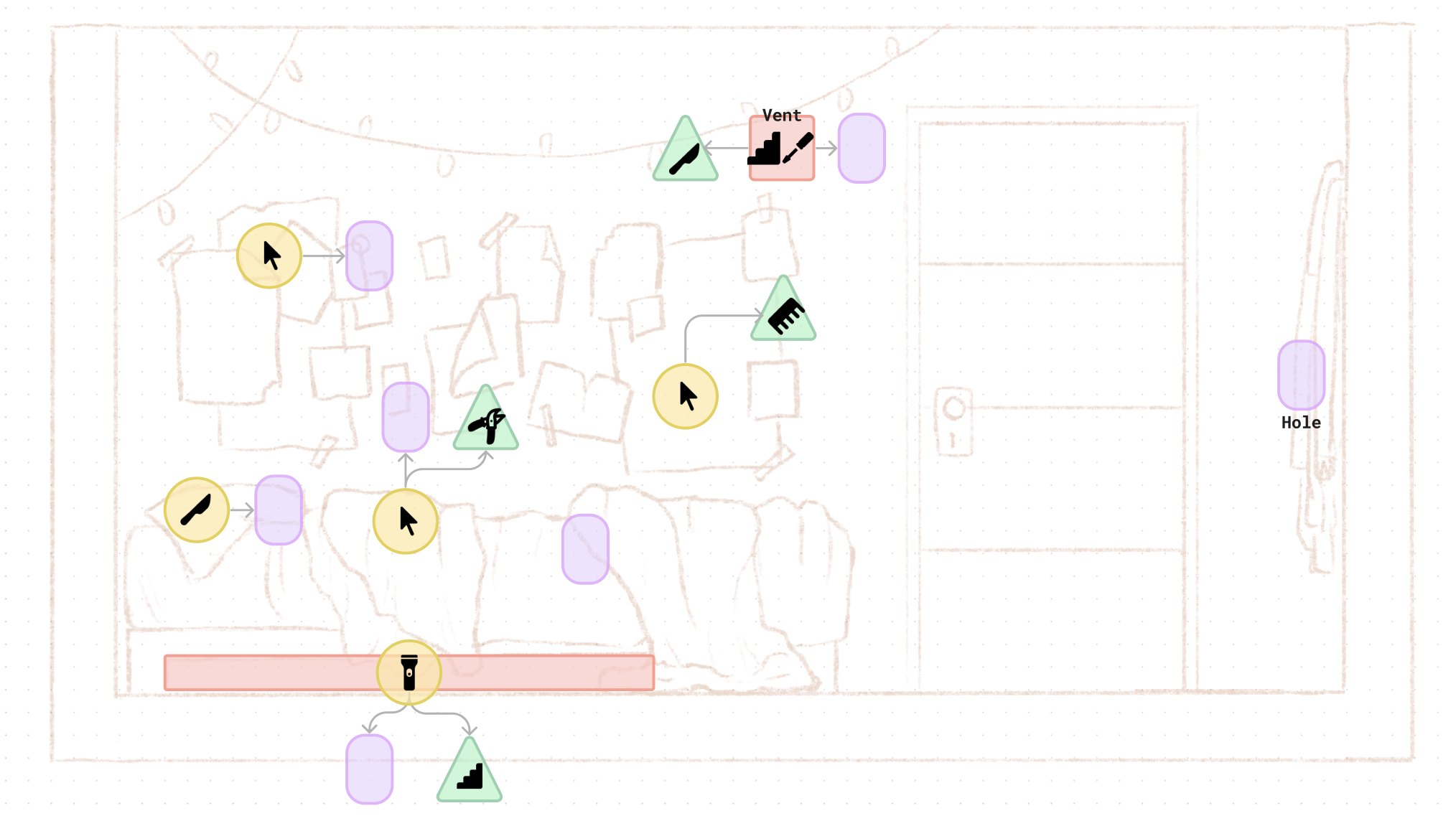
  • Game Design & UX/UI: Designed the game's flow through a puzzle dependency chart, establishing how each item, sock, and interaction unlocked the next layer of the game. Created all minigames and puzzles, and designed the entire UI, including menus and the achievement system.
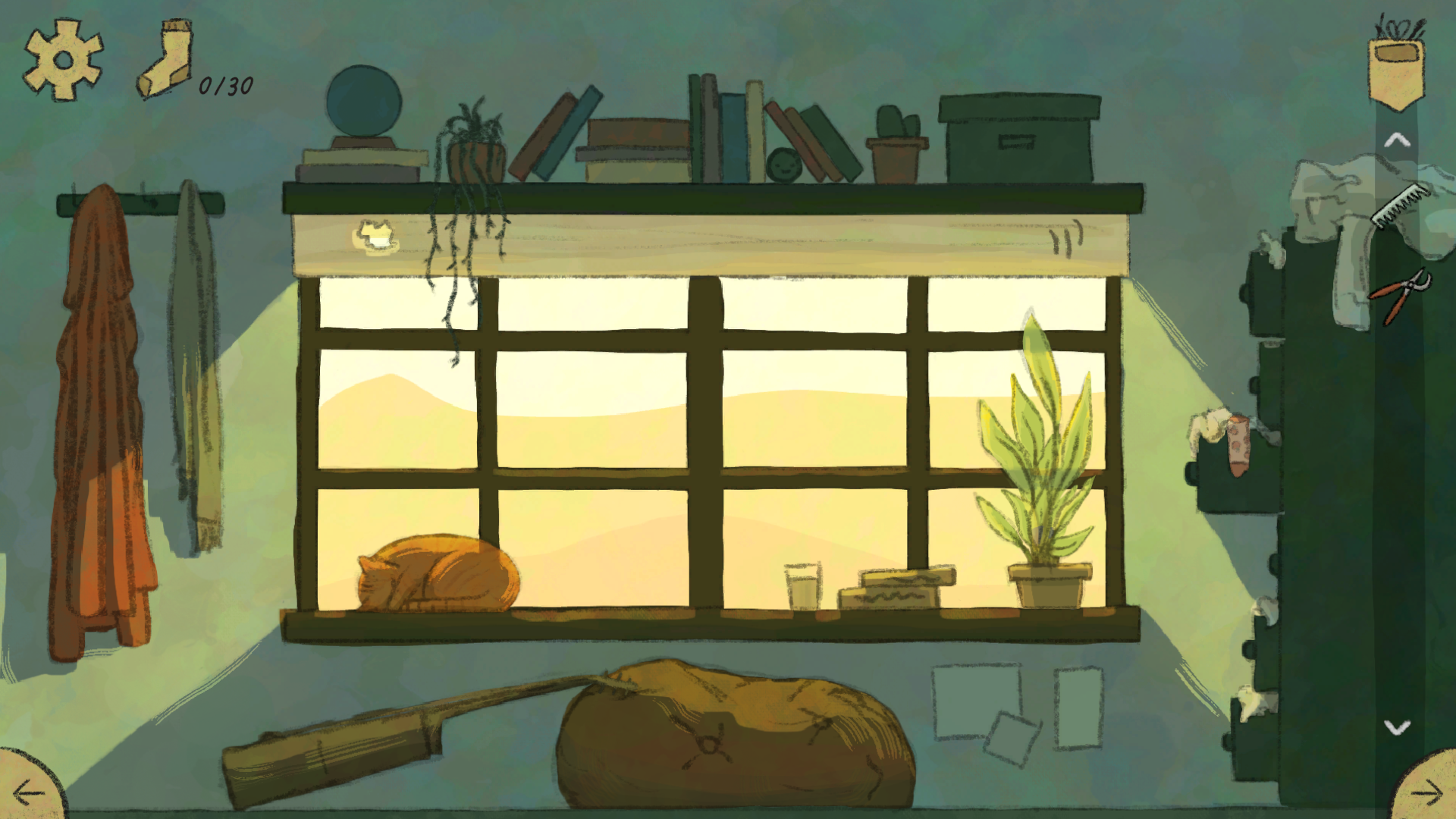
  • Art: Created every visual asset in the game, including 30 unique sock designs and the full room layout and props. Made all icons, menus, animations, and splash art.
  • Narrative: Wrote all item descriptions, sock flavor text, achievements, and contextual feedback to guide and reward the player. Produced all writing in both English and Chilean Spanish, incorporating cultural references to give the game a distinctive local personality.
  • Implementation: Developed the whole project in Unity using Adventure Creator and visual scripting, coding additionally in C# for some of the puzzles.
  • All audio (music and SFX) was composed by Francesca Melio.

Download puzzle dependency chart

Postmortem

What went well

  • This game was born from the frustration of planning more ambitious ideas, so keeping it small and light helped greatly with making it a feasible project as a solo dev.
  • Because of the size of the project, I had the time and energy to focus on details and give them personality: unique sock designs, little jokes and cultural references. Players really connected with these details.
  • Using a puzzle dependency chart early on helped me understand the flow of the game and how each item interacted with the next. It kept the design coherent and saved me from a lot of backtracking later.

What went wrong

  • Every player solves puzzles differently, so balancing them required more playtesting and iteration than I anticipated. Some puzzles felt too obvious to me but weren’t for others, and vice versa.
  • Even though the priority was to keep the scope small, it still took longer than it needed to, and I should have made firmer cuts to stick to the original scope.

What I learned

  • This game taught me that a project doesn’t need to be big to be impactful. Small scopes make room for polish, personality, and experimentation.
  • Letting someone else handle audio made the process healthier and didn’t take anything away from the game’s identity. It helped me see how small collaborations can lighten the load without compromising my vision.
  • This was the first game I took from concept to release, and it gave me a clearer, more realistic understanding of what I can handle alone. It’s now a reference point I’ll carry into future projects when scoping and planning.